


With the development of medicine today, joint diseases cannot be completely cured.Science is not standing still, but remedies have yet to be found that can restore tissue damaged by pathology.Patients seeking treatment must try a variety of medications and approaches.Conventional medicine often fails to provide effective methods.Then the patient begins to wonder how to treat arthrosis of the knee with folk remedies.
Advantages and Disadvantages of Traditional Medicine
Traditional medicines are often used to treat knee joints.The disease is difficult to treat and limb movements are gradually limited.Even traditional treatments are only designed to relieve pain and prevent complications.Patients and doctors have ambivalent attitudes toward traditional medicine, but they still resort to it when it cannot bring the desired results.
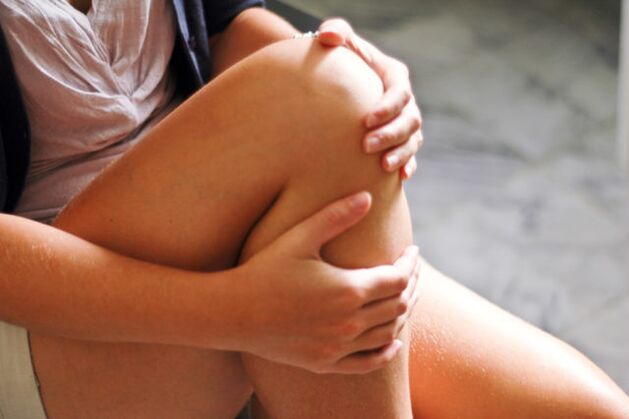
Treating the knee joint with folk remedies has both disadvantages and advantages.Advantages include:
- availability and low cost of most materials;
- Many medicinal plants help strengthen the immune system;
- Few side effects;
- Easy to use.
The raw materials of folk remedies for the treatment of knees are often included in preparations of pharmaceutical companies.Therefore, in most cases, alternative medicine is safe if dosage and usage rules are followed.It’s also worth noting that the home remedies people use to treat knee arthritis are passed down by word of mouth and have stood the test of time.However, caution must be exercised.Before using any medicine, talk to your doctor and get his or her advice.
Like any other method, folk methods have their disadvantages:
- risk of allergic reactions;
- Many methods are dismissed by conventional medicine and their effectiveness has not been proven by research;
- Some recipes available on the Internet or published in newspapers and magazines are incorrect.For example, they may contain incompatible components;
- The same plant material can produce different effects, such as herbs or fruits at different levels of ripeness.
Most doctors favor the use of traditional medicine to treat the disease.In addition, they sometimes advise patients on certain methods.But for treatment to be effective, it must be comprehensive.Therefore, traditional medicine should not be excluded when using folk remedies.
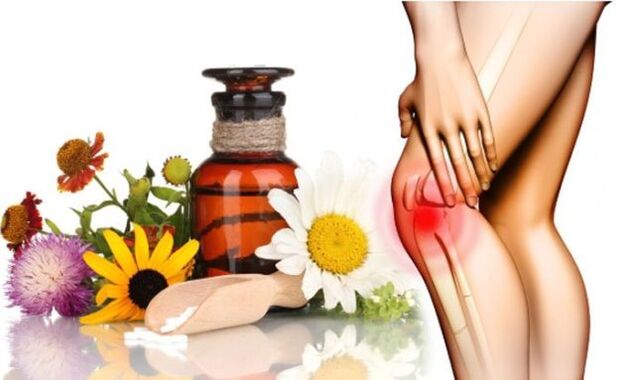
effective treatment
Basically, popular folk recipes for arthritis of the knee recommend how to prepare medicines with anti-inflammatory effects.This effect is achieved by accelerating local metabolic processes.This allows you to relieve pain, thereby improving the mobility of the knee and stopping the pathological process.
In this case, traditional medicine is not limited to decoctions and ointments.It's like traditional influences and includes many techniques and methods.The most common are the use of various ointments, liniments, dressings and spreads, i.e. topical preparations.Their effects are more pronounced.Less commonly used are oral infusions and decoctions.
It is important to remember that alternative medicine is most effective in the initial stages of pathology.Therefore, treatment of second-degree knee arthritis with folk remedies will no longer show the same good results as in the early stages of the disease.
local compression
It is difficult to imagine treating knee pain with folk remedies without compression.Patients generally prefer this form of treatment.Compresses can improve blood microcirculation, thereby reducing inflammation and swelling.This allows the joints to be freer and promotes movement of the limb.One of the great things about compresses is that they can usually be made from products you already have on hand.
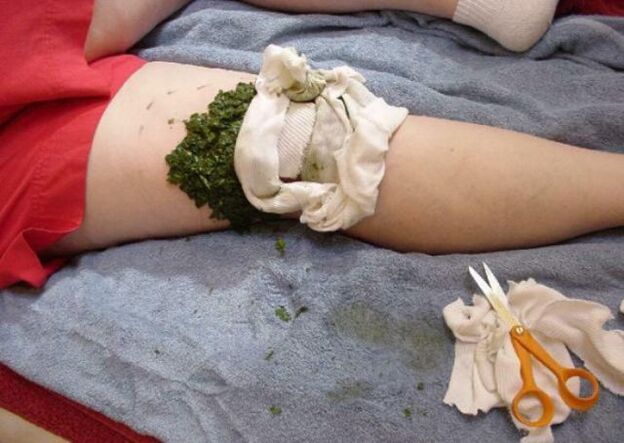
Consider popular recipes:
- Oatmeal compress.Pour boiling water into 5 tablespoons of Hercules.There shouldn't be too much water.Cook oatmeal over low heat for 8-10 minutes.Porridge should be thick, not thick or liquid.Cool the mass and wrap it in gauze or natural fabric.Apply to sore knees for a few hours.You can secure it to the leg with plastic wrap and leave it overnight.
- Horseradish compress.Grate the roots, add water and heat over low heat.Don't boil it, just let it steam as the water heats up.Then, shake off the water but do not wring it out.Wrap the horseradish in cotton cloth and apply it on your knees for 2 hours.This recipe helps relieve pain.
- Cabbage compress.You need vegetable juice.Soak a wool scarf in the liquid.Apply to joints before bed.You can use cabbage leaves coated with honey.Then fix with film.It is convenient to leave this compress overnight.
As you can see, all components are completely safe.They only cause harm to people with allergies.Warm compresses should be used until the main symptom (pain) is relieved.You can do the procedure every day, but it is recommended to take a break after a 21-30 day course.The most convenient thing to do is to apply the dressing before bed and leave it on overnight.
Tinctures and Decoctions
Tinctures are made with alcohol or water.The raw materials are plants or their components.Some infusions and decoctions can be taken internally, while others are used to prepare compresses or ointments.Infusions and decoctions are often made from herbs with anti-inflammatory properties.You can use one or more component products.But don't forget to study their interactions.
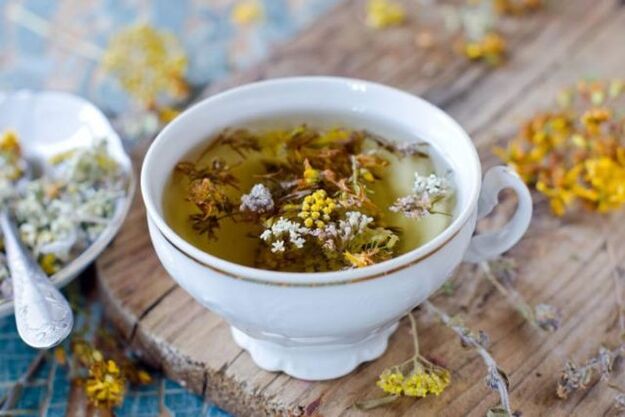
The following ingredients are widely used in arthritis tinctures and decoctions:
- bilberry leaves;
- grass and chamomile flowers;
- chestnut fruit;
- pentacle;
- birch buds;
- marigold;
- hop cones;
- Wormwood.
Tinctures and decoctions are usually used topically without side effects.Use caution when taking internally.In addition to allergic reactions, they can cause gastrointestinal disturbances.
It is worth remembering that it is best to use only freshly prepared products.
Herbal Bath Treatment
Many patients discover healing baths as they continue to search for answers to the question of how to relieve knee pain.The localization of the pathology complicates surgery.A thorough herbal bath will be more convenient.With their help, the patient can not only move the knee, but also relax it, which is also important for treatment.
It is useful to bathe with pine needles (which can be used along with twigs).Immerse the ingredients in hot water, brew until the water cools to an acceptable temperature, then remove.You can take this bath for 20 minutes.Jerusalem artichoke is also used in preparing baths.Wash and chop a few tubers and soak them in hot water.Add a tablespoon of turpentine and wait until the water has cooled slightly before taking a bath.
In order to make the effect obvious, it should be carried out continuously for 10-12 days.

mud therapy
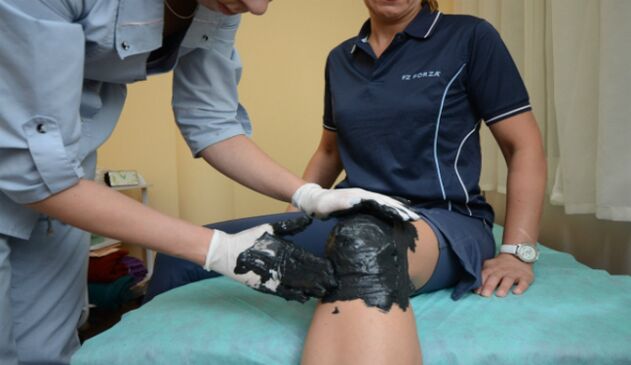
Doctors often prescribe Peloid therapy for joint patients.Patients were sent to sanatoriums, where mud with suitable properties was used.Saki and Essentuki are very popular in our country.This therapy helps speed recovery and normalizes blood circulation and local metabolism.
In addition to its effect on the joints, therapeutic mud removes toxins and waste products from the body, which also has a positive effect on healing.Often, after recovering in a sanatorium or resort, patients will notice improvement and feel refreshed, which makes further treatment easier.
Applications of Medicinal Plants
Various additives are used on patients during physical therapy in a hospital setting.But you can perform this type of surgery at home using herbs and paraffin.Applications are also made from medicinal mud or clay, which is rich in plant decoctions.
The difference between this method and traditional compression is that the lotion must have chemical, thermal and mechanical effects on the affected area.This is accomplished by applying a plant paste that is irritating to the knees.You can preheat it to increase the thermal impact.Mechanical shock can be obtained by placing tape on the knee and gluing watermelon, sunflower, melon or buckwheat seeds.
Rub with camphor and grease
In folk medicine, camphor oil is often used to treat joints.The substance is available in pure form or mixed with other ingredients.It is thought that this helps partially restore joint lubrication, but this is a very controversial claim and has not been confirmed by official medicine.One thing is for sure - folk remedies containing camphor can effectively relieve pain.Treating the knee requires 10% oil, but alcohol will work too.
Patients notice positive results after rubbing with fat.Badger is most commonly used, and pork or beef is less commonly used.The latter often serves as the basis for herbal ointments.Badger fat is also used in its pure form.
Fat and camphor in the form of friction dilate blood vessels, ensuring blood flow to the knees and improving nutrition.
Effectively wrapped with mumiyo and honey
There is also an effective home remedy that contains the answer to how to cure knee problems.Folk remedies often involve the use of mumiyo, a resin-like substance of natural origin.Mixed with bee products, it has a strong analgesic effect.To prepare the medicine, you need to mix 100 g of liquid honey with 0.5 g of mumiyo.
The wrap is done in the evening and left overnight, the residue is washed off in the morning.Repeat the process for 10 days, then take a break of 2-3 days and continue the course if needed.
Leech therapy
This method doesn't quite fit the definition of "folk therapy" since it can only be used in a clinical setting, but it is still considered unconventional.Expert observations show that leech therapy is effective in treating knee arthritis.Medicinal leeches should only be used as part of a complex therapy.
This effect is due to enzymes injected into the patient's bloodstream when bitten.Thanks to these substances, blood circulation improves and pain is relieved.
When should you refuse traditional treatment?
Treating the knee with folk remedies is not always possible or useful.It should be noted that for grade 2 and 3 joint injuries, you should first listen to your doctor's advice.In this case, traditional medicine not only does not help, but actually exacerbates the problem.If new symptoms occur, pain worsens, or an allergic reaction occurs, alternative treatment should be discontinued immediately.It is also necessary to visit a doctor, where you can get advice on the use of folk remedies.
Today, doctors are looking for a drug that will help treat joint diseases without denying natural medicine.As with any other remedy, caution should be exercised and the methods of official medicine should not be ignored.